Blog·Mar 11, 2024
Bending People's Perception to Your Will
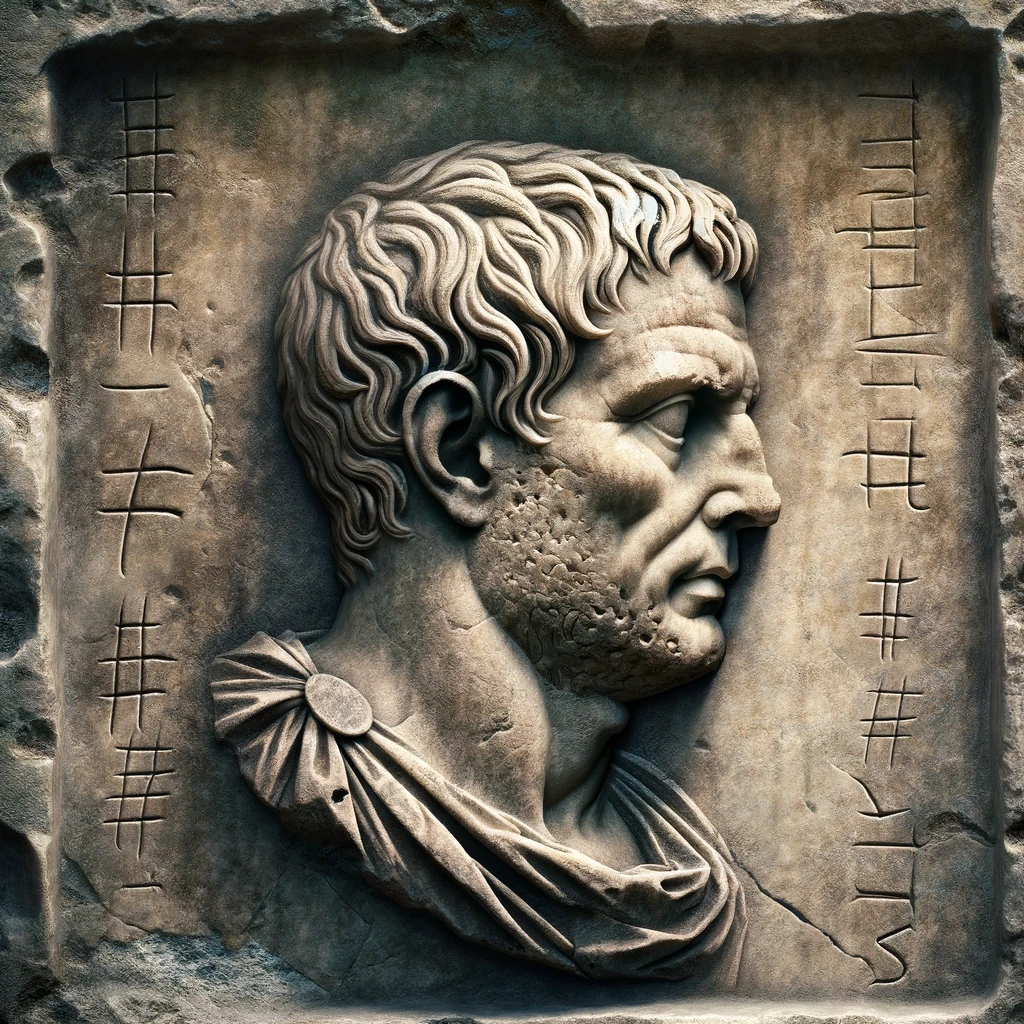
Yes, that is a Twitter hashtag carved into old stone, about how Julius Caesar died. It looks like a joke. But think about what would have happened if that history had played out on the internet, where a radical idea in an unstable time could reach everyone at once.
Today almost anyone can use technology to change what a lot of people think, and that is enough to swing elections and change how a society works. You can spread hate, write propaganda aimed at exactly the right people, or build an army of fake accounts that repeat whatever you say. There is a lot of room to misuse it.
Imagine Julius Caesar today, fighting his battles on social media. “The die is cast,” he posts, and this time it’s a tweet that goes viral instead of an army crossing the Rubicon (ref. Caesar Crosses the Rubicon). Then one provocative idea spreads across the internet: “What if we ruled ourselves?” Soon Rome’s streets are empty. Caesar’s empire, which looked so solid, starts to fall apart. What brings it down is not (et tu? :) Brute force. It is people whose minds were turned by a good story, told by someone charismatic online. Narrative is not so hard to artificially construct and validate. Charisma, well, is factor of a time gone by since much of ideas these days spread via our digital social networks.
The saying “the pen is mightier than the sword” has always meant a lot because historians could shape how we see rulers, sometimes by their own choice or by orders. But today, being a thought leader is even more powerful.
Technology can do a lot of good too. It can make learning more fun, show us what life was like in the past, or keep us company when we feel lonely. So the question I keep coming back to is how we make sure these tools are used well, and how we avoid being pushed around by algorithms and propaganda without even noticing.
–
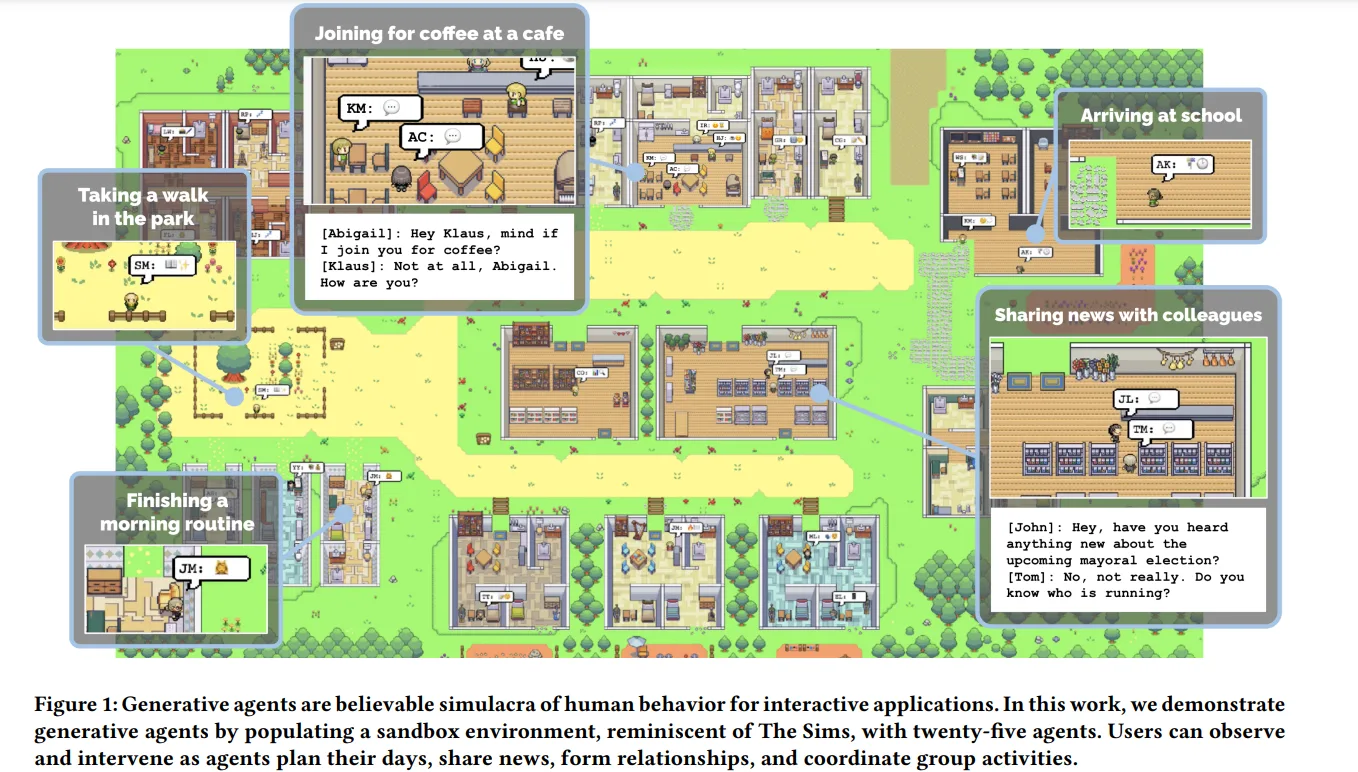
Generative Agents: Interactive Simulacra of Human Behavior came out as a research paper in Human Computer Interaction (HCI). The paper introduces generative agents designed to simulate believable human behavior for various interactive applications. The agents can remember what happened to them, think back on it, talk to each other and make plans as things change around them. The paper gives three things: the agents themselves, a memory system that keeps each agent consistent over a long time, and a small town like The Sims where you can watch them live. Here, Joon Sung, one of the first authors from Stanford, explains the paper in detail. I recommend watching it. The design is much simpler than you would expect, and that’s what makes it beautiful.
They’ve developed digital characters, known as “generative agents,” that mimic human behavior in a surprisingly realistic way. These agents go about their daily lives, engaging in activities from cooking breakfast to heading off to work. Each one has its own memory, so it can remember what happened before and use that to decide what to do next.
Set in a virtual town of The Sims, users can interact with these agents, witnessing their ability to form relationships, plan events, and even remember past interactions. A standout example is how these agents autonomously organized a Valentine’s Day party, inviting others and coordinating their attendance without any external prompts. (This emergent property of a swarm of agents is very fascinating to me!)
What I found more important is that the paper also talks about what could go wrong when agents like these are let loose in real systems.
Imagine these smart digital characters, or agents, getting trained on a subreddit. They’re designed to be charming and dodge any trouble, engaging the community to help it flourish until self-sustaining chat discussions naturally keep flowing. The worrying part is that the same agents could go into other communities and start fights on purpose. They would bring up topics that upset people, and slowly make the place worse from the inside.
It’s like planting a super charismatic person in a club who knows exactly what to say to make the place more popular. But then, they start visiting other clubs, spreading rumors or picking fights, ruining the vibe everywhere they go. This doesn’t happen in real life because people risk their own image. A bot has no reputation to protect, so nothing holds it back. Now picture millions of them all working toward one goal, bringing down a Caesar. That is something to watch for in the 2024 elections.